
Practical recommendations for your vehicle, home, and everyday life – based on products we’ve actually used, not random items picked just to fill a page.
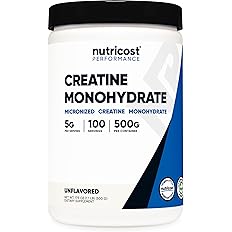
Nutricost Micronized Creatine Monohydrate Powder. Has the strongest research support for improving strength, muscle mass, and exercise performance.
| Product Price | $21.50 |
Product Description
Nutricost Micronized Creatine Monohydrate Powder. Monohydrate has the strongest research support for improving strength, muscle mass, and exercise performance. This one works, but let’s look at the other types of creatine to explain why.

Types of creatine compared
| Type | What it is | What to know |
|---|---|---|
| Creatine monohydrate | Creatine bound to a water molecule. | Has the strongest research support for improving strength, muscle mass, and exercise performance. |
| Micronized creatine monohydrate (this product) | Monohydrate processed into finer particles. | May mix more easily, but it is the same chemical form, not a more powerful type. |
| Creatine hydrochloride (HCl) | Creatine combined with hydrochloric acid to form a salt. | Dissolves more readily in water, but that has not been shown to produce better muscle-building results than monohydrate. |
| Buffered creatine / Kre-Alkalyn | Creatine formulated with an alkaline ingredient to raise its pH. | Marketed for improved stability and fewer stomach issues; comparative research has not demonstrated better results or fewer side effects. |
| Creatine ethyl ester (CEE) | A chemically modified form of creatine. | Marketed for better absorption, but research suggests it works less well than monohydrate. |
| Magnesium creatine chelate | Creatine bound to magnesium. | Some limited research supports exercise benefits, but it is much less studied than monohydrate. |
| Creatine nitrate | Creatine combined with nitrate. | Evidence is limited; any additional performance benefit may come from the nitrate rather than a superior form of creatine. |
| Creatine citrate, malate, or pyruvate | Creatine combined with citric, malic, or pyruvic acid. | Other available salts, with less evidence supporting their use than monohydrate. |
| Creatine anhydrous | Creatine without the water molecule found in monohydrate. | Contains more creatine by weight, but that does not establish better workout results. |
What the labels actually mean
“Micronized” describes particle size, while “powder,” “capsules,” and “liquid” describe delivery formats, not necessarily different chemical types. The ingredient label tells you which creatine form you are getting.
The main takeaway: alternative forms often promise better absorption, easier mixing, or smaller doses, but none has convincingly displaced monohydrate as the best-supported option.
Flavoring – Forget That!
I’ve done the research, and Nutricost Micronized Creatine Monohydrate Powder is the best value. Don’t waste your money on flavored versions! You’re paying extra for flavoring instead of actual creatine. The unflavored version is practically tasteless anyway! Flavored versions have less servings per container because of the flavoring that is added! Again, you can’t really even taste the unflavored version!
For example: Unflavored: 100 Servings. Orange flavor: Only 74 Servings!
What Does Proper Creatine Do?
Creatine helps build muscle, increase strength, and improve performance during high-intensity workouts (even just any form of exercise) especially when paired with consistent training. It also supports energy production in the brain and may help with memory and mental performance, they legally say “research on improved focus and ‘mental clarity’ is still developing”, but I am proof that it helps with that!
This page contains Amazon affiliate links. If you purchase through these links, we may earn a commission at no additional cost to you. As an Amazon Associate we earn from qualifying purchases.
| See also different: | Everyday Gear, Household |